
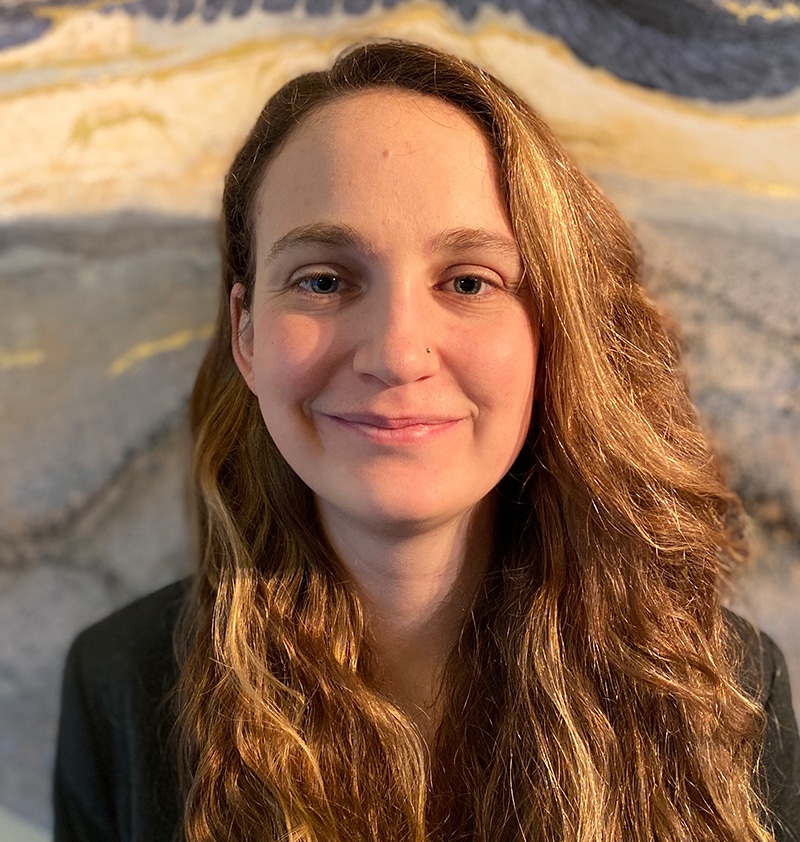
Maraya Best specializes in representing whistleblowers under the Foreign Corrupt Practices Act, the Commodity Exchange Act, the Dodd-Frank Act, the IRS whistleblower law, and the False Claims Act. She has a special expertise in representing international whistleblowers. She has worked closely with whistleblowers and the investigating federal agencies in disclosing illegal activities that have occurred in numerous foreign countries.
Although almost all of her clients are anonymous and confidential, she assisted in the successful representation of Alex Chepurko, who obtained a judgment on behalf of the United States for $69.6 million in a False Claims Act qui tam lawsuit. Maraya has also provided highly effective assistance in the representation of Howard Wilkinson in his historic money laundering case.
Maraya received her JD from Northeastern University School of Law in 2018 and began her career at Kohn, Kohn & Colapinto as the 2018 recipient of the highly prestigious and competitive Estelle S. Kohn Memorial Fellowship awarded by Northeastern University School of Law. She went on to worked at KKC for several years as an Associate Attorney.
After serving as an attorney with the United States Department of Justice’s Civil Rights Division for five years, where she assisted in the prosecution of hate crimes and law enforcement misconduct; led investigations of civil rights cold cases; and directed the implementation of a civil rights records act, Maraya has returned to KKC as a Partner.
Promoting International Qui Tam Whistleblowing
Kohn, Kohn and Colapinto has played an instrumental role in advancing whistleblower rights worldwide. Currently the partners represent whistleblowers from every continent on earth (except Antarctica) in pursuing whistleblower reward cases under U.S. laws.
Steve Kohn has been sponsored by the U.S. Department of State to promote whistleblowing on a world-wide scale, including special seminars and programs in the Czech Republic, Hungary, Bosnia, Serbia and Thailand. He has given major keynote addresses in Peru and Greece and presented in numerous international conferences and has testified on behalf of whistleblowers before the European Parliament and the Danish Parliament. Mike Kohn has made major international presentations in Poland, South Korea and Israel. The firm filed extensive comments supporting greater whistleblower protections in the now-approved European Directive on Whistleblowing.
Whistleblower attorney Stephen M. Kohn and partners of Kohn, Kohn & Colapinto regularly advise congress on crafting whistleblower laws. And play an instrumental role in drafting whistleblower protection laws, such as the Sarbanes-Oxley Act (SOX), The Whistleblower Protection Enhancement Act, and the Dodd-Frank Act.
SEC & IRS Rulemaking
During the Dodd-Frank rulemaking process, our partners worked closely with the SEC to create an effective whistleblower program. Kohn, Kohn & Colapinto’s partners met personally with each of the five SEC Commissioners. They presented them with detailed reports and proposals setting forth rules that were essential to make the law work for Dodd-Frank whistleblowers as intended by Congress. Furthermore, Kohn, Kohn & Colapinto’s whistleblower attorneys seek to protect and enhance legal protections for tax fraud whistleblowers. Our firm has filed numerous internal revenue service rulemaking petitions, filed extensive briefs to the IRS and testified at IRS rulemaking hearsing to strengthen the tax whistleblower program.
In recognition of the growing importance of whistleblower litigation, The National Law Journal named the whistleblower attorney and advocacy law firm of Kohn, Kohn & Colapinto as one of top fifty plaintiff’s law firms in the United States. The firm’s partners were officially named as among “America’s Elite Trial Lawyers.” In its September 29, 2014 article, “Elite Trial Lawyers: The 50 Leading Plaintiff’s Firms in America,” the National Law Journal named Kohn, Kohn & Colapinto as one of the firm’s “doing the most creative and most important work in the courtroom.”
- 2013-2020 – A-V Preeminent, Martindale-Hubbell®
- 2014 – “Elite Trial Lawyers” Designation, National Law Journal (Awarded to KKC LLP)
- 2014 – America’s Most Honored Professionals, American Registry (Awarded to KKC LLP)
- 2009 – Top Attorneys, Washington DC Super Lawyers (Awarded to KKC LLP)
- 2008 – Friend of the IEEE Award
- 2003 – “Hot List” of Plantiff’s Law Firms, National Law Journal
Read Maraya’s Publications at:
What Clients are Saying

“When you’re in danger, you need someone you can trust, who isn’t afraid, and who knows how to fight. KKC always has my back.”

“Most law firms it really is all about billable hours. For these guys it’s all about the justice.”

“Thanks [KKC] from the bottom of my heart. I think if you ever have a whistleblowing claim they are the folks to take care of it for you.”

“In my world, courage is spelled KKC. They go up against the most powerful adversaries and win.”
Maraya’s Latest Thinking
What Makes a Whistleblower Law Successful In Today’s Globalized World? Part V
Originally posted in Mondaq Specific considerations for European States implementing the EU Directive On October 23, 2019, the European Union passed a Directive designed to protect citizens who report violations of law, i.e., whistleblowers. Pursuant to this mandate, twenty-seven countries must now adopt individual whistleblower protection laws fulfilling the Directive's requirements by December 17, 2021. Therefore, right now, and throughout the remainder of 2020, each EU nation is debating the contents of a domestic whistleblower law that, at a minimum, implements the Directive. In order to provide guidance on how such national legislation should look, Part V of this series focuses on the most important special considerations for EU nations in this process, in order to ensure that these laws both successfully implement the framework provided by the Directive and sufficiently encourage and protect whistleblowers. Article 6 (Anonymous Reporting) Under Article 6 of the EU Directive, Member States have the discretion ...
The International State of Corruption: Why the Foreign Corrupt Practices Act Continues to be the Most Successful Mechanism Available to Fight Corruption
Originally posted in The National Law Review Corruption has severe damaging effects on democratic institutions, undermining public accountability and diverting public resources from important priorities such as health, education, and infrastructure. As stated by former Secretary-General of the United Nations, Kofi Annan, on the passage of the United Nations Convention Against Corruption: Corruption is an insidious plague that has a wide range of corrosive effects on societies. It undermines democracy and the rule of law, leads to violations of human rights, distorts markets, erodes the quality of life and allows organized crime, terrorism and other threats to human security to flourish. Essentially, if left unchecked, corruption becomes more than just an economic or international development issue, it begins to threaten basic human rights. One of the primary ways corruption manifests is through bribery and improper uses of official funds. And despite the damage such crimes cause to global development, there ...
What Makes A Whistleblower Law Successful In Today’s Globalized World? Part IV
Originally published in Mondaq In order to be truly successful at preventing fraud, whistleblower protections must cover disclosures permitted under international anti-corruption conventions and encourage whistleblowers to cooperate with foreign governments' law enforcement agencies as permitted by these conventions. Explicitly permitting certain whistleblowers to cooperate with such law enforcement agencies without being subject to retaliation in their home countries is important for several reasons. First, corruption (particularly bribery and fraud) and dangers to public health and the environment are often transnational in nature. For example, the current COVID-19 pandemic is worldwide, and whistleblowers from China providing information as to the nature and severity of the virus would have been instrumental combating its spread. Additionally, pollution and other environmental problems are inherently incapable of adhering to national boundaries. Moreover, as clearly illustrated by Foreign Corrupt Practices Act (a U.S. law prohibiting amongst other things, the bribery of foreign officials) cases, ...
Our Client Received the Largest Whistleblower Reward in World History of $104 Million
Bradley Birkenfeld broke the back of Swiss bank secrecy. He was the first Swiss banker to file a case under the IRS whistleblower law. The results were unprecedented. UBS bank (at the time the largest bank in the world) had to pay a fine of $780 million. They also had to close all known U.S. accounts, and for the first time in history, the bank turned over the names of 4450 U.S. taxpayers for prosecution in the United States. Mr. Birkenfeld obtained the largest ever individual qui tam whistleblower award in history, $104 million.






Pro Bono Public Service
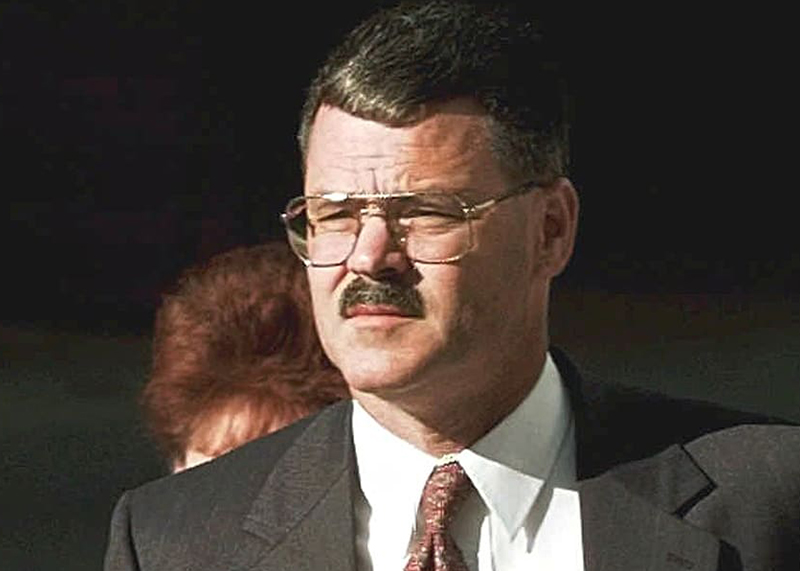
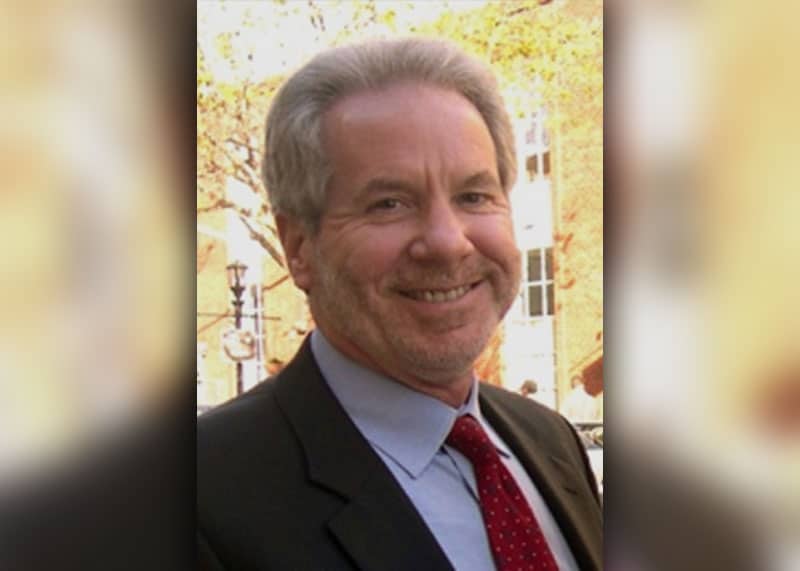
Dedicated to protecting whistleblowers, the National Whistleblower Center (NWC) was founded in 1988 by three experienced whistleblower-rights attorneys, Stephen M. Kohn, Michael D. Kohn and David K. Colapinto. Mary Jane was selected as the NWC’s first Public Interest Law Fellow, and soon became a major leader in the NWC. She currently is the NWC corporate Treasure and serves on its Board of Directors. She founded the whistleblower protection blog, and for years managed many of the NWC’s highly successful programs.