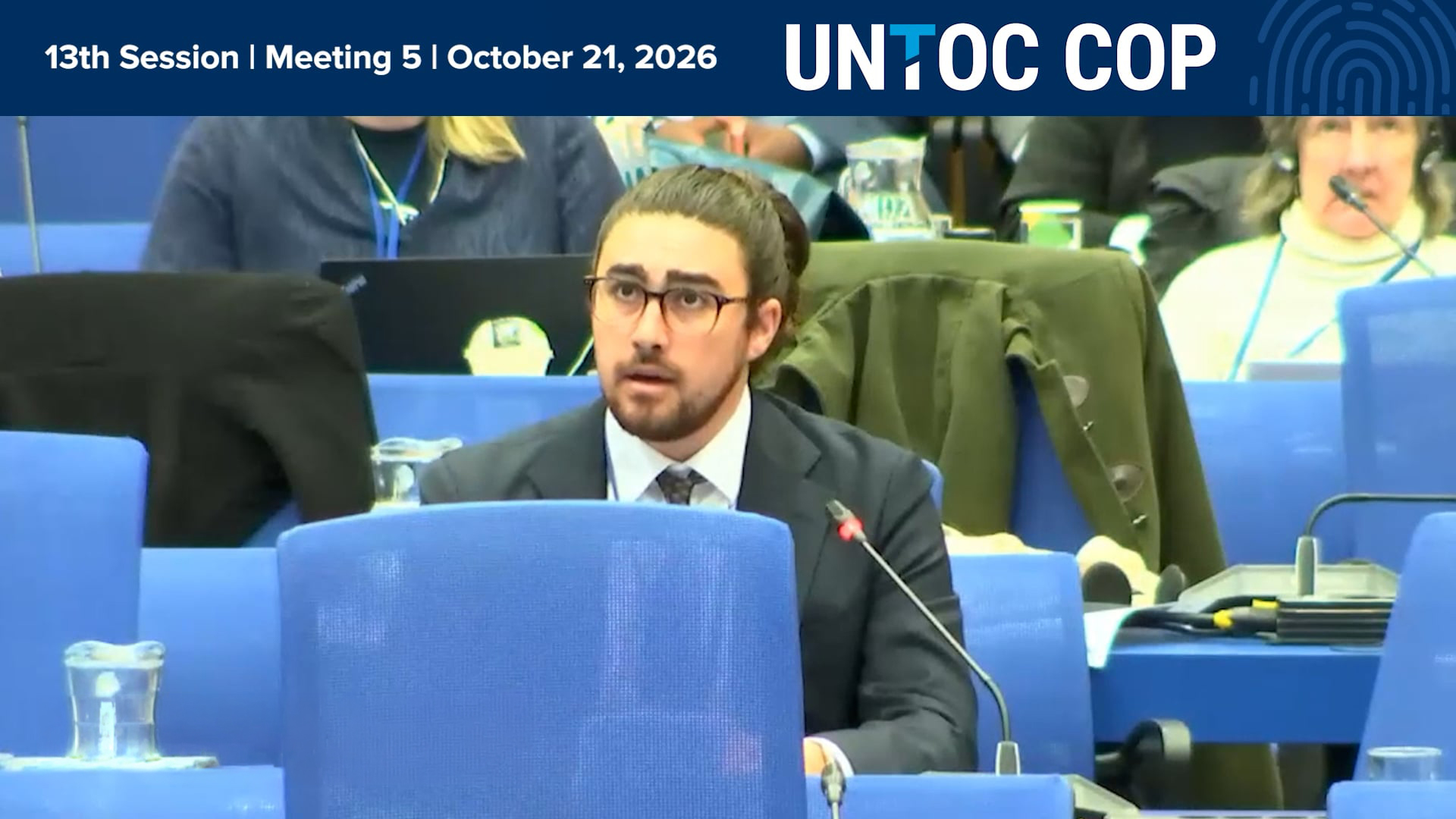
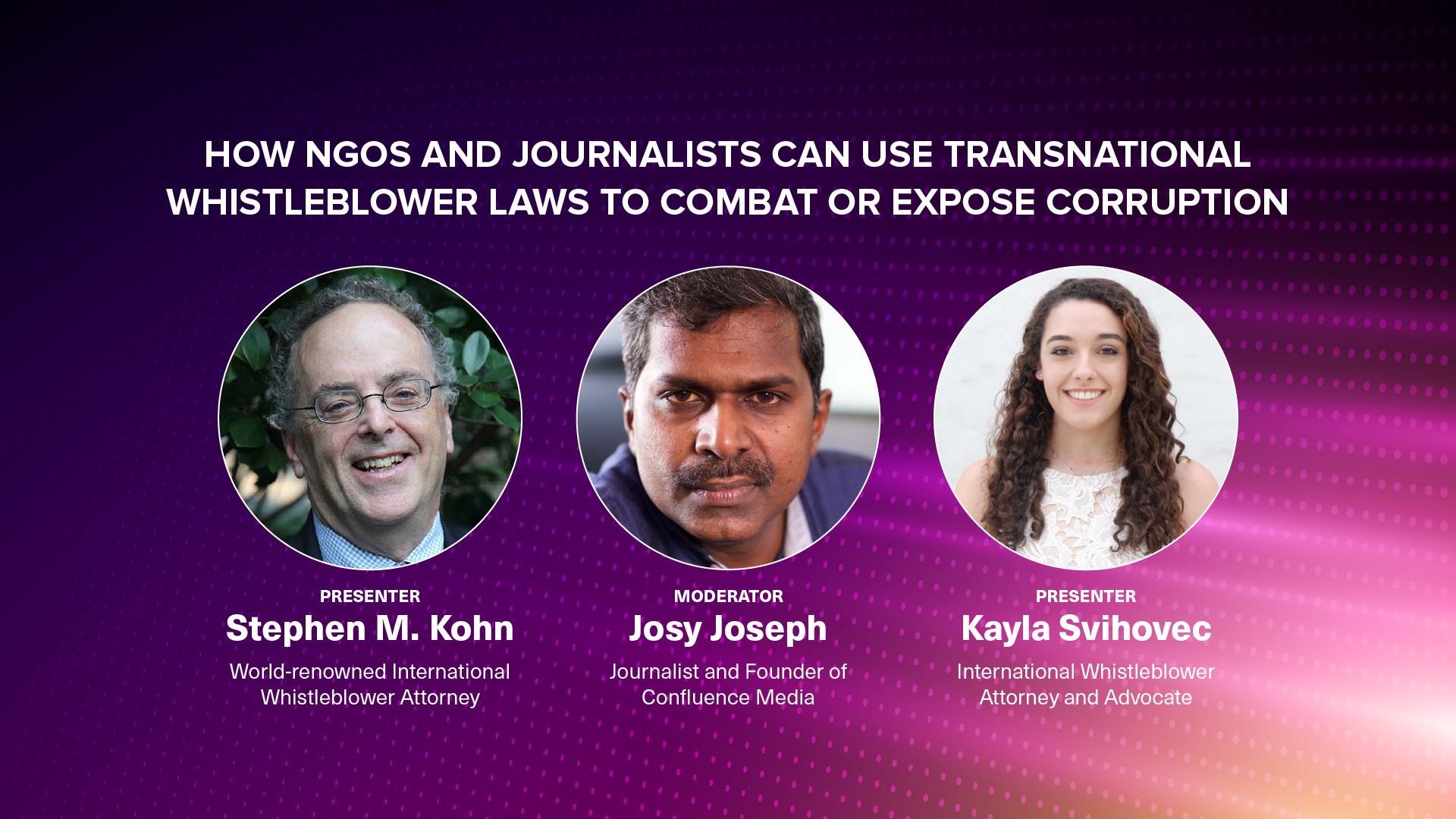
[UNTOC COP13] Rebuilding Global Anti-Corruption Enforcement: Stephen Kohn on Why Other Countries Must Step Up
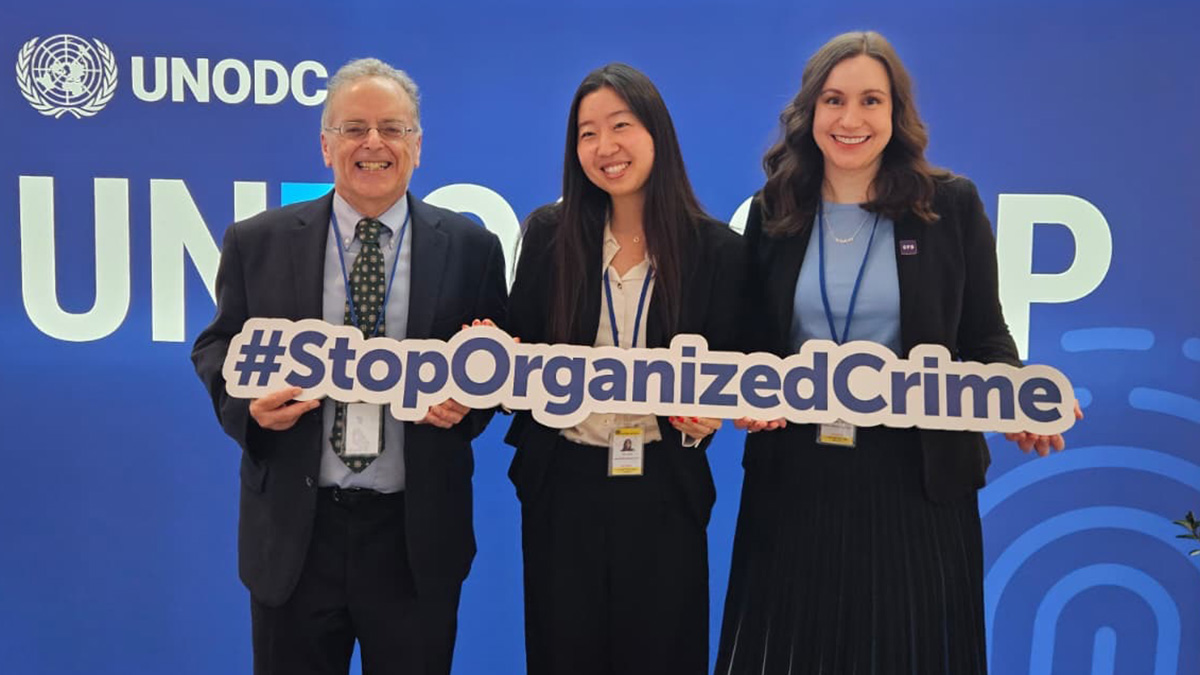

During a side event at the 13th Conference of the Parties to the UN Convention against Transnational Organized Crime (UNTOC COP13) in Vienna, Stephen M. Kohn, founding partner of Kohn, Kohn & Colapinto (KKC) and Chairman of the National Whistleblower Center (NWC), sent a clear message. He said transnational whistleblower laws have proven effective, but the world has relied too much on one country to enforce them, and now others need to step up to fill the void.
Watch the Full Side Panel!
The side panel session, Effective Practices for International Cooperation on Anti-Money Laundering and Illegal Offshore Banking, was hosted by the NWC and moderated by Jeana Lee, the NWC Program Manager. Kohn spoke after Eliza Lockhart of the Royal United Services Institute (RUSI), whose remarks are discussed in an article by International Whistleblower Advocates.
Key panel takeaways
The UN Convention against Transnational Organized Crime (UNTOC) is the world’s only global treaty for combating transnational organized crime.
Adopted in 2000 and in force since 2003, UNTOC has 195 member countries. Its three protocols cover human trafficking, migrant smuggling, and the illicit manufacture of and trafficking in firearms.
The Conference of the Parties (COP) is the treaty’s governing forum. Its 13th session was held at the UN Office on Drugs and Crime (UNODC) headquarters in Vienna. This year’s session reportedly drew more than 2,100 participants from 142 countries, representatives of 320 NGOs, and 115 side events.
The context: a change in U.S. enforcement
Kohn began with the recent change in U.S. policy.
In February 2025, an executive order paused most Foreign Corrupt Practices Act (FCPA) enforcement for 180 days. In June 2025, the Department of Justice released new guidelines ending the pause but narrowing the types of cases it will prioritize.
Kohn said this change has led to a collapse in enforcement. Recoveries from FCPA cases, which used to range from hundreds of millions to more than a billion dollars a year, have fallen drastically. The number of new investigations has fallen to almost zero.
If the people who bribe ministers and senior officials stop facing consequences, he warned, “they’re going to take more bribes.”
These are the first transnational laws that work
According to Kohn, the FCPA and the newer U.S. anti-money laundering whistleblower law are the first transnational anti-corruption laws proven to work.
These laws address corruption in other countries involving foreign companies and individuals, and they can be enforced globally.
He stressed that this effort has not been limited to the U.S. and highlighted three main points:
- Whistleblowers come from everywhere. The SEC treats a foreign national the same as a U.S. citizen when it comes to awards. The agency continues to receive tips from all over the world. Based on his own tracking, Kohn estimated that at least $500 million has been paid to non-U.S. whistleblowers in FCPA cases.
- Other countries’ law enforcement agencies took part. Kohn showed maps of the countries where bribes were paid and where foreign agencies cooperated with U.S. prosecutions. Many of those countries, he said, lack strong foreign bribery laws of their own, and their agencies relied on U.S. laws because they are the strongest available.
- The money has flowed back. By his count, the U.S. returned about $7 billion over the last ten years from FCPA sanctions to non-U.S. law enforcement agencies that helped, and about $21 billion in sanctions came from companies headquartered outside the United States.
The UK link
Kohn turned his attention to the United Kingdom.
He noted that the director of the UK Serious Fraud Office (SFO) had said more than 700 UK whistleblowers have engaged U.S. law enforcement since 2012. He said that in cases where the SFO and U.S. authorities worked together between 2010 and 2023, they recovered about $9.5 billion, with about $1.7 billion shared back with the UK.
He credited the UK with taking the first steps toward its own system.
HM Revenue and Customs launched its Strengthened Reward Scheme for tax whistleblowers in November 2025, and in October 2026 the government said the SFO is developing plans to reward whistleblowers who report fraud and bribery.
The anti-money laundering law
Kohn also mentioned the U.S. Anti-Money Laundering Whistleblower Improvement Act, which was signed in December 2022. This law gives qualifying whistleblowers between 10% and 30% of sanctions collected over $1 million and creates a fund to pay the awards.
Since laundered money crosses borders and can come from traffickers, drug dealers, terrorists, or tax evaders, Kohn called the law a historic breakthrough. It puts significant responsibility on banks to report illicit funds. At the time of the panel, he noted that no award had been paid under this law yet.
His proposal: a united front
Kohn’s central argument was that countries should no longer remain passive.
He said that relying on the US worked for a period, but led to a false sense of security. Some countries chose not to enact their own laws to protect domestic industries.
Because these crimes cross borders, that logic fails: the UK can prosecute a Swiss company that pays bribes in South Africa, and any two or three EU members together could have broader jurisdiction than the United States did.
He suggested that if the UK joined forces with one or two countries such as France, Spain, or Switzerland, it could double its jurisdiction and penalties. He believes such a system could be rebuilt within about two years and be more powerful than the one it replaces.
He concluded by saying that it is no longer acceptable to ignore billions of dollars in potential recoveries that could repay victims and fund prosecutions.
In 2026, he said, it is “a moral and ethical imperative.”
If you have information about foreign bribery, money laundering, or other financial misconduct, the attorneys at Kohn, Kohn & Colapinto can help you understand your options and protect your rights. Contact us for a confidential consultation.